Begin with the proposed decision
Record what the clinician is asking you to consider and which problem or goal the proposal addresses. Keep the person’s own priorities beside it: for example, understanding the purpose of a test or the practical impact of a proposed procedure. Do not select a treatment from a list of cosmetic or rehabilitation services. A service name alone cannot establish that it is appropriate for you.
Ask about meaningful alternatives
The NHS describes valid consent as an informed, voluntary decision. Ask the treating professional to explain the benefits, risks and reasonable alternatives relevant to you, including what waiting or not proceeding would mean where applicable. Request clarification of unfamiliar terms. This discussion concerns your actual circumstances; percentages from an advertisement are not a substitute for an individual explanation.
Check the practical consequences
Ask what preparation, recovery, support, costs or follow-up the proposed option would involve. Keep the provider’s actual instructions rather than reconstructing them from memory. If a recommendation changes, ask for clarification of the current plan. Leave medication, exercise, preparation and aftercare instructions to the clinical team; this sheet supplies questions rather than a clinical protocol.
Record the next decision honestly
Write down what has been explained, which question remains unanswered and who will answer it. Ask for information in a format you can understand and appropriate assistance if needed. A booked consultation is not consent to every procedure discussed. Take time and support appropriate to the actual decision, and use the relevant urgent-care route when symptoms require it.
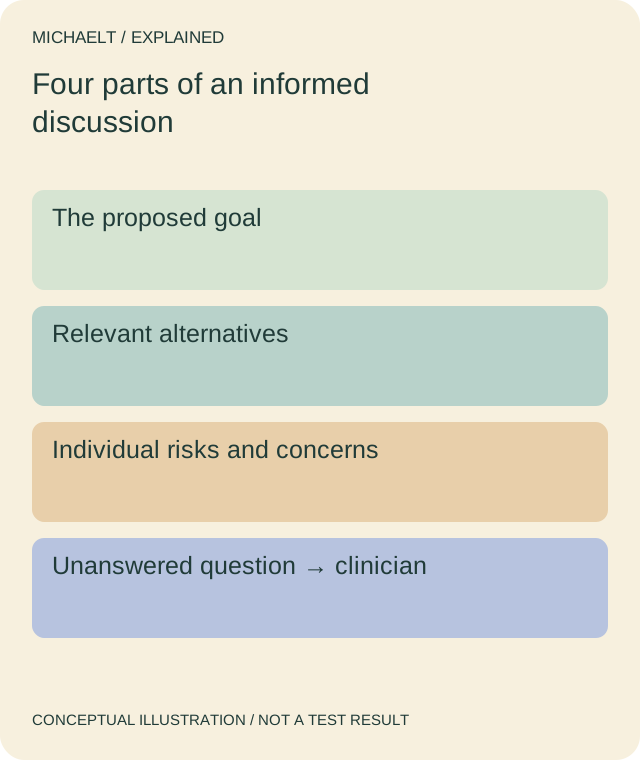
Read the drawing as text
The goal, alternatives and personal concerns inform a discussion. An unanswered question stays open rather than becoming consent.
Work through an example
In a fictional dental consultation, option A is proposed but its goal and alternatives have not yet been explained. The person asks for those explanations and for the expected follow-up arrangements. The record therefore says discussion incomplete, rather than option accepted. No diagnosis, procedure, benefit estimate or recommendation for a real patient appears in the example.
Illustrative example; figures, people and organisations in the worked record are fictional.
The example record
Decision
- Evidence
- Option A proposed
- Next question
- What goal does it address?
Alternatives
- Evidence
- Explanation requested
- Next question
- What are the relevant choices?
Practical impact
- Evidence
- Follow-up unanswered
- Next question
- What support would be needed?
Next step
- Evidence
- Discussion incomplete
- Next question
- Who answers the open question?
Download blank worksheet (.csv) ↗Download worked example (.csv) ↗
Keep your own record
Use the result within its scope
Bring the questions to the treating team. An organised discussion record supports understanding; it cannot determine capacity, replace clinical consent procedures or establish which treatment is best for an individual.
Reference sources
Earlier articles on this subject
- Different Services Of Family Cosmetic Dentistry ↗ — 2021-06-10, Maria Baldwin.
- Consult Texas Urology Specialists For Better Health ↗ — 2021-05-08, Maria Baldwin.
- How Does Internal Family Systems Therapy Work? ↗ — 2021-08-10, Maria Baldwin.
Continue with a related task
Prepare a child’s first dental-visit questions
Add the child’s communication needs and the purpose of the first appointment without copying treatment promises from a clinic advertisement.

Use current public guidance for timing
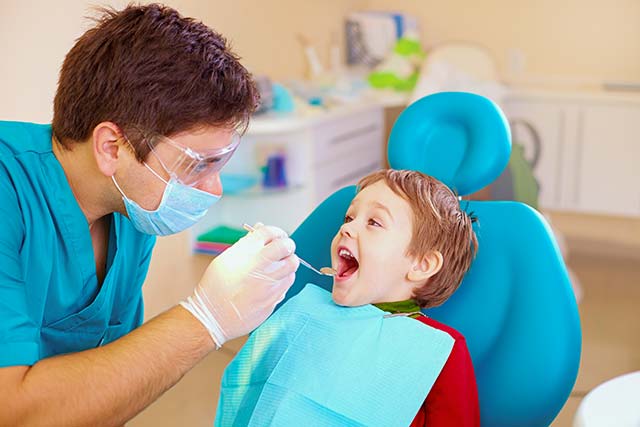
NHS children’s-teeth guidance advises an initial dental visit when the first milk teeth appear, or before twelve months, and subsequent check-ups as the dentist advises. Keep that named guidance and its context rather than the earlier source’s unsupported choice between one and three years. If there is pain, an injury or another concern, seek appropriate timely clinical advice rather than waiting for a routine visit.
Ask what the appointment actually includes
Confirm the relevant service, access arrangements and what the parent or carer should bring. Explain communication or support needs privately through the clinic’s advised route. Ask how the child will be introduced to the setting and how the professional explains an examination. A first appointment is not permission for every procedure a general services page lists.
Keep observations and recommendations separate
Bring relevant observations and questions without diagnosing a dark mark, a habit or a tooth’s position yourself. Ask the dentist which next step and individual instructions apply. Do not buy a restrictive device, change a child’s routine or select orthodontic treatment from a marketing article. Record the actual explanation and the question that remains unanswered using the existing care-options method.
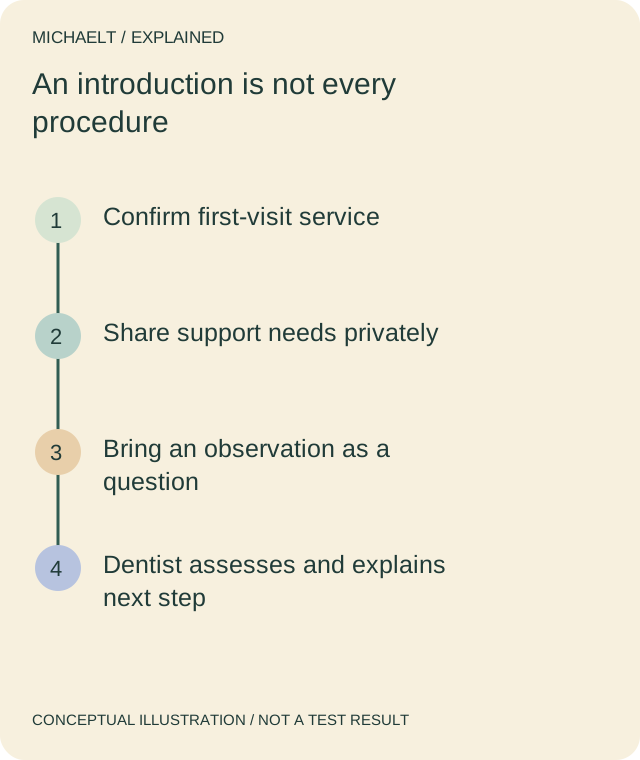
Read the drawing as text
The fictional first-visit plan prepares access and questions. It does not diagnose a child or accept every treatment listed by a clinic.
Work through an example
A fictional family confirms the first-visit service and privately asks about the child’s communication needs. The parent brings a question about a noticed habit without labelling it a diagnosis or buying a corrective product. The dentist’s actual assessment and recommendations remain future events; no child, tooth or treatment is evaluated here.
Illustrative example; figures, people and organisations in the worked record are fictional.
The example record
Timing
- Illustrative evidence
- Current NHS first-visit context
- Meaning or next step
- Concerns use appropriate timely advice
Access
- Illustrative evidence
- Actual clinic confirmation
- Meaning or next step
- Private communication needs
Observation
- Illustrative evidence
- Parent’s question
- Meaning or next step
- Not a diagnosis or device recommendation
Next step
- Illustrative evidence
- Dentist’s explanation awaited
- Meaning or next step
- No treatment already accepted
Download blank worksheet (.csv) ↗Download worked example (.csv) ↗
Keep your own record
Use the result within its scope
Use current local services and individual dental advice. This preparation record does not examine a child, prescribe toothpaste or devices, establish a diagnosis or promise that the visit will prevent every dental problem.
Reference sources
Earlier articles on this subject
- When To Visit Child Dental Clinic In Sacramento? ↗ — 2021-03-19, Maria Baldwin.
- Thumb Sucking Effects In children ↗ — 2021-04-05, Maria Baldwin.