Choose the correct reporting route
Identify the responsible authority and the type of observation. NYC 311’s catch-basin complaint page is one named example, not a universal service for every city or emergency. Use the correct current route for the actual place and situation. An urgent danger requires the appropriate local emergency arrangements rather than a routine worksheet or a delayed administrative message.
Record a safe location reference
From an ordinary safe position, note the street or public location details needed by the authority and the time of observation. Do not enter floodwater, stand in traffic, open a grate or enter a drain. Keep the observation route separate from any personal address or unnecessary information about nearby residents. A useful location description does not require a risky close-up photograph.
Describe what is visible
Record visible water, debris or a damaged-looking surface in literal terms, with a photo only if it can be taken safely and lawfully. Separate those observations from a guessed cause such as a broken underground pipe. Do not clear a blockage, use chemicals or move hazardous material to verify your theory. This page is not a drainage inspection or maintenance procedure.
Keep the receipt and follow-up
If you submit a report through the authority’s actual route, retain its reference, date and any stated follow-up instructions. A sent report is not evidence that it was inspected or repaired. Record later observations separately and avoid repeatedly submitting the same issue without checking the authority’s process. This website does not send a service request on your behalf.
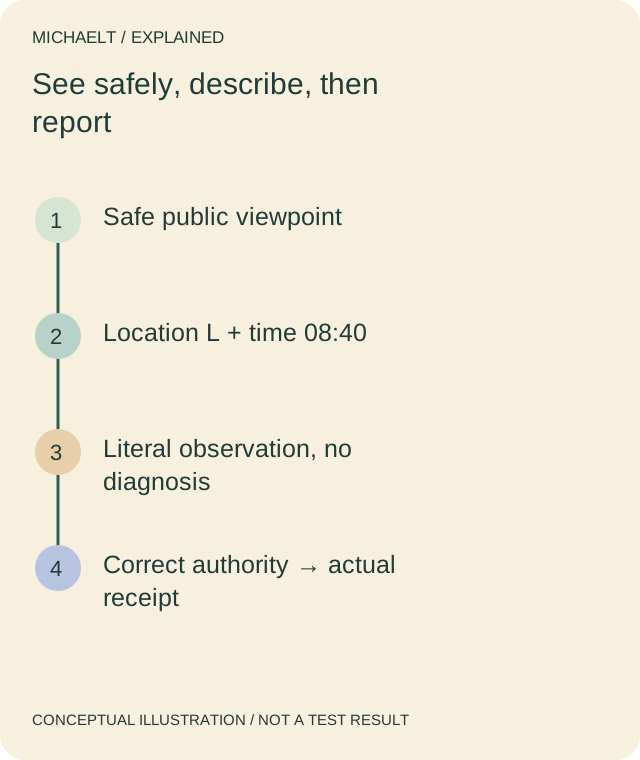
Read the drawing as text
A safe observation becomes a location-specific report. Submission and a later repair remain separate events.
Work through an example
A fictional report describes standing water beside public location L at 08:40, viewed from a safe pavement position. It includes no claim about an underground cause. The actual service reference would be added after submission; in this worked example that field remains illustrative, and no real public-service report has been made.
Illustrative example; figures, people and organisations in the worked record are fictional.
The example record
Location
- Example
- Public reference L
- Meaning
- Enough for correct authority
Observation
- Example
- Standing water / 08:40
- Meaning
- Cause unknown
Evidence
- Example
- Safe ordinary view
- Meaning
- No grate opened
Receipt
- Example
- Actual reference if submitted
- Meaning
- Not a completed repair
Download blank worksheet (.csv) ↗Download worked example (.csv) ↗
Keep your own record
Use the result within its scope
Use current local reporting and emergency guidance. The goal is a safe, precise observation, not a DIY drainage intervention or a promise of response time.