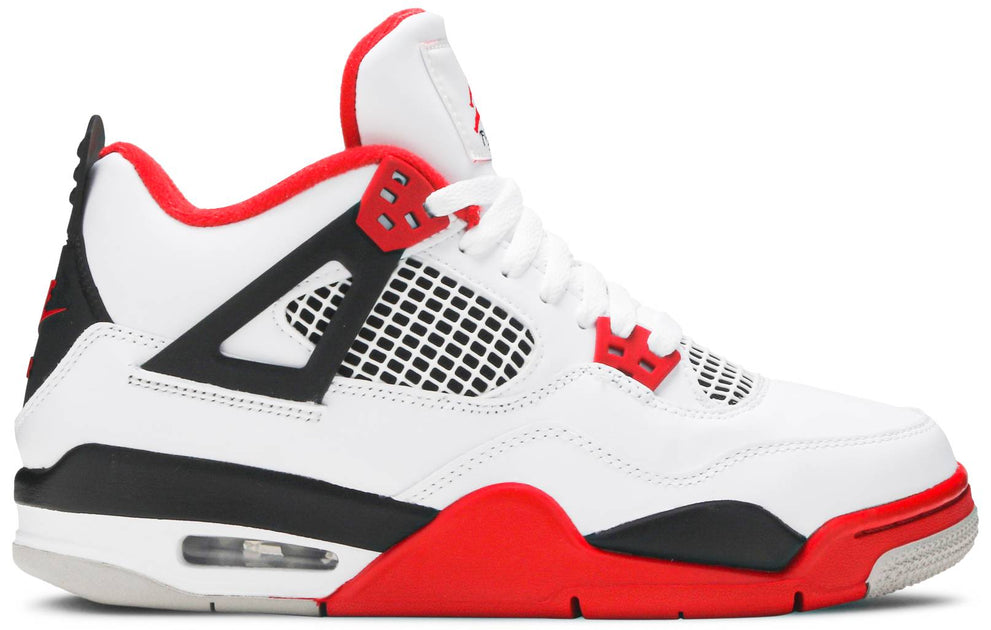

Start with the identifiers
Save the brand, style code, colour description and seller’s size system from each actual listing. Record the page date and any difference between the title, photographs and item details. A familiar silhouette or a similar product name is insufficient to merge two offers. Ask the seller to resolve a mismatch before ordering; a comparison sheet cannot authenticate a branded product.
Use the chart for that product
Open the maker’s relevant chart and distinguish foot length from a number printed on packaging. Nike explicitly distinguishes its foot-length measurement from the CM marking on its boxes and labels. Do not silently treat UK, US and EU numbers as interchangeable or copy a conversion from an unrelated brand. Keep the exact chart reference beside the selected system.
Keep fit questions separate
Record the wearer’s own relevant measurements following the actual maker’s instructions, then ask about unresolved width, construction or intended-use questions. Do not turn a size match into a promise of comfort, injury prevention or suitability for running. A photograph does not establish how the shoe fits a particular foot. Keep personal measurements private rather than posting them in a public review.
Resolve the purchase conditions
Request the actual retailer’s current return conditions, including any restrictions on trying or returning the item. Record the answer separately from the size decision. If the listing changes style code, repeat the comparison instead of carrying forward the old fit assumption. On receipt compare the ordered identifiers with the delivered item before following the retailer’s inspection and enquiry process.
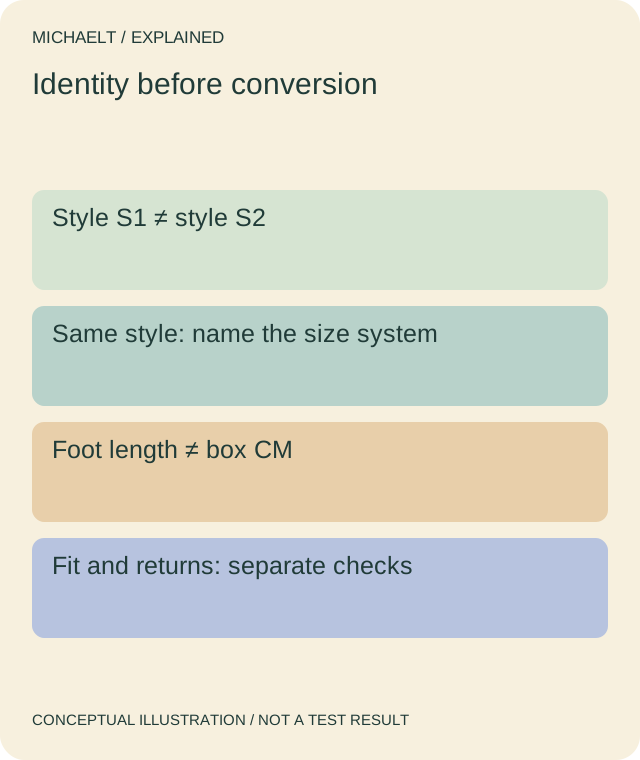
Read the drawing as text
Resolve style first, then the size system and chart; keep actual fit and return conditions separate.
Work through an example
A fictional listing A shows style S1 and EU size E; listing B uses a similar title but style S2. The buyer first marks the styles different. A second comparison uses S1 in two stores, retaining each size-system label and the maker’s chart. No actual branded shoe is authenticated or tested in this example.
Illustrative example; figures, people and organisations in the worked record are fictional.
The example record
Identity
- Listing A
- Style S1 / colour C
- Check
- Compare exact code
Size
- Listing A
- EU system stated
- Check
- Use corresponding chart
Fit
- Listing A
- Width unanswered
- Check
- Ask seller or maker
Return
- Listing A
- Current terms requested
- Check
- Do not assume a universal period
Download blank worksheet (.csv) ↗Download worked example (.csv) ↗
Keep your own record
Use the result within its scope
Keep the final chart and listing version with the order. A resolved identifier is useful purchasing evidence; it is not a medical assessment or a guarantee that an item is genuine.
Reference sources
Earlier articles on this subject
- All About Jordans Shoes ↗ — 2021-08-09, Maria Baldwin.
- What is a barefoot running shoe? ↗ — 2022-07-30, Maria Baldwin.
- Order UGG Short Boots ↗ — 2021-01-11, Maria Baldwin.