Name the actual park and visit
Start with the park, intended date and the official information you checked. SANParks publishes general rules and directs visitors to park-specific information. Keep those sources together rather than assuming every safari destination has the same roads, gate times, activities or vehicle requirements. An archived landscape image cannot establish current access or a confirmed booking.
Separate a wish from a permitted activity
Write the observation you hope to make, then identify a permitted way to take part under the park’s actual arrangements. SANParks prohibits intentional disturbance or feeding of wildlife and restricts leaving vehicles to designated areas in relevant parks. Do not invent an approach distance, call animals, collect specimens or leave a permitted route to improve a photograph.
Check operational details independently
Confirm the actual gate or activity times, route restrictions, booking conditions and relevant accessibility questions with the park. Record uncertain details and contact the official route before relying on them. Do not transfer an old fee, schedule or health statement to a current visit. Obtain appropriate professional travel-health advice for personal questions; this planning sheet supplies none.
Prepare a no-sighting alternative
Choose an officially permitted activity that still makes the visit worthwhile if wildlife is not seen or an intended activity is unavailable. Keep a record of the confirmed alternative and any changes to the plan. A wildlife observation log can record no sighting honestly. It must not become a promise of a particular species, an operator recommendation or evidence of a real tour completed by the author.
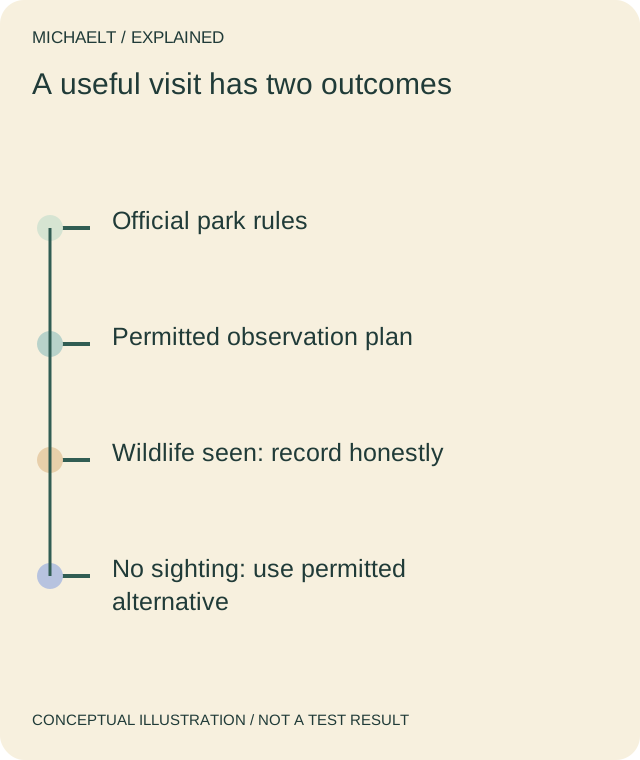
Read the drawing as text
Both a sighting and no sighting are legitimate outcomes. The plan remains within park rules in either case.
Work through an example
A fictional visitor hopes to observe birds from an authorised viewpoint. The current park information has not yet confirmed the relevant activity time, so the visitor asks the official contact and keeps a visitor-centre alternative. No sighting, opening time, admission price or route availability is invented.
Illustrative example; figures, people and organisations in the worked record are fictional.
The example record
Park/date
- Evidence
- Official sources saved
- Plan state
- Specific visit
Activity
- Evidence
- Permitted viewpoint to confirm
- Plan state
- No off-route approach
Timing
- Evidence
- Official reply pending
- Plan state
- Not assumed
Alternative
- Evidence
- Permitted visitor activity
- Plan state
- Useful without sightings
Download blank worksheet (.csv) ↗Download worked example (.csv) ↗
Keep your own record
Use the result within its scope
Recheck actual notices before travelling. Rules support responsible planning; they do not guarantee wildlife, weather, accessibility or safety in every circumstance.